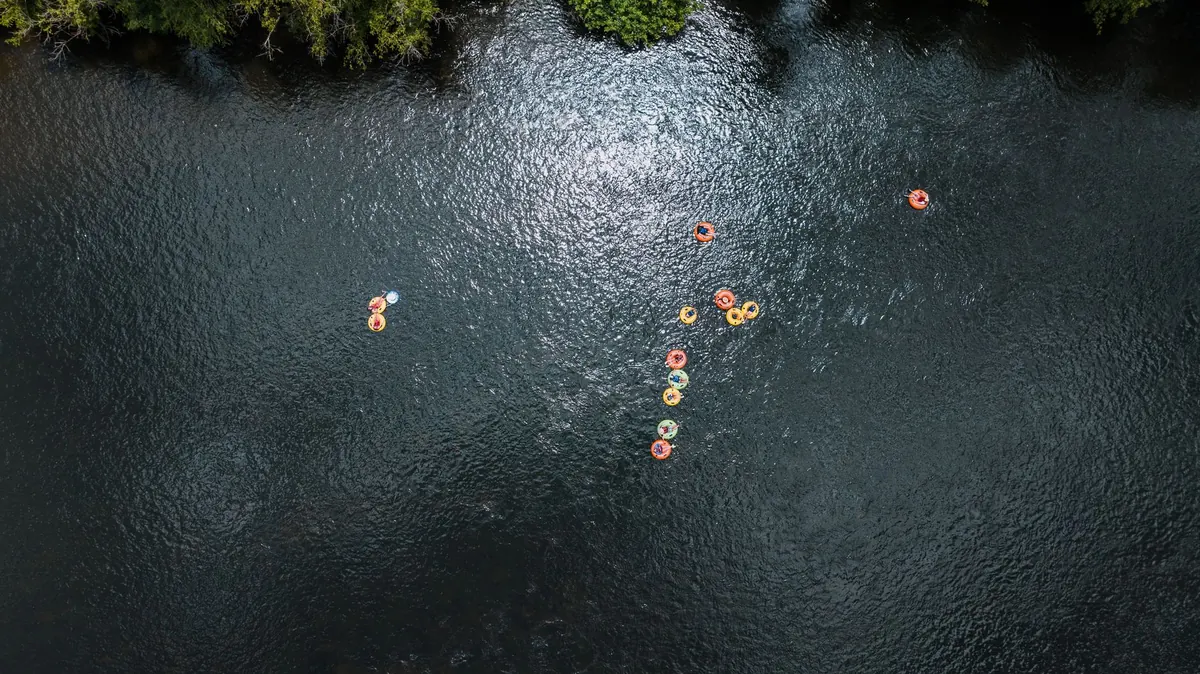
The first time you float a river on a tube, everything feels easy. The current does the work, the sun is out, and the whole afternoon looks lazy. Then the water quickens, someone drifts toward a fallen tree, and the gap between fun and hurt turns out to be about four seconds.
Most river tubing injuries are not freak accidents. They are the same handful of decisions, repeated on rivers everywhere, every summer. Here are the seven that cause the most trouble, and what to do instead.
1. Skipping the Life Jacket, or Wearing It Wrong
A properly fitted life jacket is the single most important piece of gear on the river, and it is the one people leave in the car because the water looks calm and shallow. Rivers are not pools. The water is often colder than you expect, the bottom is uneven, and a mild current can move you faster than you can swim back to your tube.
Fit matters as much as wearing it. A jacket should be snug enough that you cannot pull it up over your ears, with every buckle closed and the zipper fully up. A jacket that rides up around your chin when you float will do very little when you actually need it. Sit on a life jacket? That is not using one. Many rivers and rental companies require them anyway, so check the local rules before you launch.
2. Roping Tubes Together
It looks thoughtful: clip the family's tubes together so nobody drifts off. In practice, ropes and bungees turn a group of floating tubes into one clumsy, tangled object that cannot react to the river.
If one tube flips, the rope drags the others. If the line catches a branch, several people get pulled toward it at once. A rope stretched across moving water can wrap around a wrist, an ankle, or a neck. And when you need to move quickly toward an eddy or an exit, you cannot.
Instead, float in a loose formation:
- Keep a few feet of open water between tubes — close enough to talk, far enough to maneuver.
- Put one confident paddler in front to read the river and one at the back to gather stragglers.
- Agree on two signals before you start. A raised fist means "eddy out here." A point means "go that way."
- If someone flips, the two nearest floaters help. Everyone else stays clear and points to the swimmer.
3. Standing Up in Moving Water
This is the mistake behind some of the most serious river injuries. When a tuber drifts into a shallow, fast stretch, instinct says stand up and walk. In current, standing can be far more dangerous than floating.
A foot wedged between rocks while the current pushes your body downstream is a situation even strong swimmers cannot muscle out of. Cold water also steals your coordination quickly, and slick algae on river rock gives you almost no traction.
What to do instead:
- Float on your back, feet up and pointing downstream, head up, and use your arms to angle toward shore or an eddy.
- In shallow water, scoot along on your butt rather than trying to walk.
- Stand only in calm, knee-deep water where you can see a firm, gravel bottom.
- If you are heading toward a hazard you cannot avoid, stay on your back with your feet downstream and hold on. Wrapping your arms around the tube and leaning back is better than reaching for the bottom.
4. Floating on a Pool Toy
An inflatable meant for a swimming pool has no business on a river. Thin vinyl punctures on the first sharp rock edge, seams split under the pressure of a current, and cheap valves leak all afternoon. When the tube goes flat mid-float, you are suddenly swimming a river in whatever shoes and clothes you wore for a lazy day.
Use a tube built for the river: heavy-gauge material, welded seams, reinforced bottom, sturdy handles, and a proper valve. Inflate it firm but not rock hard — air expands in the sun — and bring a pump and a patch kit, leaving them in the car at the takeout. Check the seams and valve before you launch, not after.
5. Ignoring the River's Mood
Two rivers can look identical and behave nothing alike depending on flow. Before you go, check the local gauge reading, recent rainfall upstream, and any dam release schedule. High, muddy water means fewer eddies, faster current, and more wood moving downstream. Cold water changes everything too, tightening your chest and draining your grip in minutes.
Learn to spot the two hazards that catch tubers most: strainers, where water pushes through branches or fallen trees, and low-head dams, which can recirculate a tube and hold it. Both are best avoided entirely. Scout your takeout and at least one mid-route exit from land before you put in, and pick a shorter stretch than you think you need.
6. Bad Footwear and Loose Gear
River bottoms hide broken glass, sharp shells, and unseen rocks. Flip-flops wash off in the first rapid, and bare feet turn a small slip into a cut that ends the day. Wear old sneakers or dedicated river shoes with a heel strap that will stay on when the current pulls.
Keep gear tight, too. A dry bag clipped to the tube is fine; a bag dangling from your wrist is not. Skip anything around your neck, and put keys and a phone in a zipped pocket or sealed pouch. Bring more water than you think you need, plus sunscreen and a hat, because a float always takes longer than planned. On cold days, leave the cotton at home — wet cotton against your skin pulls heat out fast.
7. Treating Drinking as Part of the Float
Alcohol and moving water are a poor pairing. Even a couple of drinks slow your reactions, soften your judgment about risk, and make it harder to notice that you are cold or getting tired. In the sun and heat, they add to dehydration. Many rivers and counties also have their own rules about alcohol on the water, and some rental companies will not allow it at all — check before you load the cooler.
Save the drinks for the takeout, and keep a water bottle within reach while you float.
Before You Push Off
Most of these mistakes take seconds to correct on the bank. Run through this list every trip:
- Life jacket fitted, zipped, and buckled on every person.
- River tube inspected, properly inflated, patch kit and pump waiting at the car.
- Flow, weather, and water temperature checked; takeout located.
- Shoes on feet, gear secured, water and sunscreen packed.
- Someone on land knows your route and expected return time.
- Group roles and hand signals agreed before the first current.
If you are new to tubing, go with a guided outfitter or an experienced friend for your first few runs. Reading current is a skill you build by watching water, and a calm float with a good plan is far more fun than a rescue. If you have a heart condition, a recent injury, or any health concern about cold water or exertion, talk to a doctor before you go.
Photo: K / Pexels